CentralIA, Initiative-Management Console over a Version-Control Provider
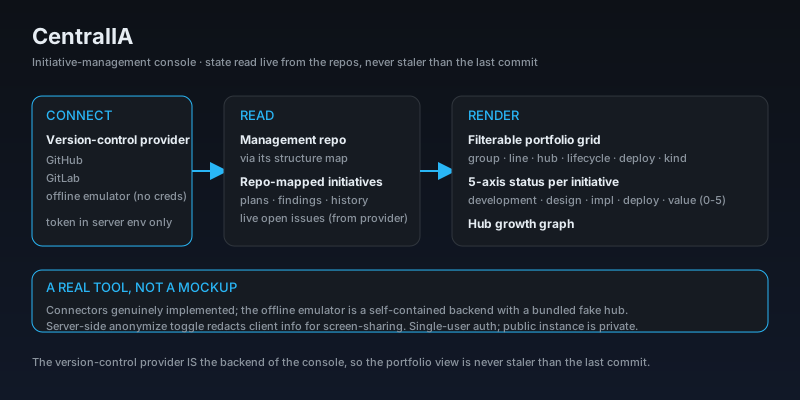
A connection-first web console that connects to a version-control provider (GitHub, GitLab, or an offline emulator), reads a management repo through its structure map, and renders a whole portfolio of repo-mapped initiatives: a filterable grid, per-initiative 5-axis status (development, design, implementation, deployment, value), implementation backlog, live open issues, plans, findings and history, plus a hub drill-down with a growth graph showing how a suite of components knits together through consumes edges. It is a real tool, not a mockup: the connectors are genuinely implemented and the offline emulator is a self-contained backend with a bundled fake management repo. The access token lives in the server environment, never the browser or a database, and a server-side anonymize toggle redacts client info for screen-sharing.
Business Context
Any organization or individual running a real portfolio of software initiatives needs a single, always-current view of where everything stands, tied to the repos rather than to a spreadsheet somebody forgot to update. CentralIA turns the version-control provider itself into the backend of a management console, so the status is never staler than the last commit. The anonymize mode makes it safe to show a client-facing portfolio without leaking client identities, and the offline emulator means it can be evaluated with zero setup and zero credentials.
Strategic Value
CentralIA is a connection-first management console that reads state live from repos instead of a hand-maintained dashboard, with real connectors (GitHub, GitLab, offline emulator), a 5-axis initiative model, and a component growth graph. Built as a real tool with a genuine self-contained emulator, server-only token handling and server-side anonymization, it is a reusable pattern for portfolio management over version control. The public instance is single-user and private; the offline emulator is the way to see it without credentials.
The Challenge
Once you run more than a handful of software initiatives across many repos, the state of the whole portfolio lives nowhere: it is scattered across READMEs, plan files, issue trackers and your own head. Which initiatives are stalled, which are deployed, which are just plans, how the components consume each other. Answering that by hand does not scale, and a static dashboard goes stale the moment a repo moves. The state has to be read live from the source of truth, the repos themselves.
Our Approach
CentralIA is connection-first: you connect to a version-control provider, point it at a management repo, and declare the structure file that maps the portfolio. It then reads the whole set of repo-mapped initiatives live and renders them. The portfolio grid filters by group, line, hub, lifecycle, deploy class, kind, a per-axis threshold and free text. Each initiative detail shows a 5-axis status (development, design, implementation, deployment, value, each scored 0 to 5), the implementation backlog, live open issues pulled from the provider, and the plan, findings, history and deployment notes. A hub drill-down renders a growth graph where nodes are coloured by component type and ringed by lifecycle, with directed consumes edges showing the suite knitting together. Three header toggles cover theme, language, and a server-side anonymize mode (real redaction of client info, default off, for screen-sharing). The access token is kept in the server environment only, never in the browser or a database. It ships with a genuine offline emulator, a self-contained backend serving a bundled fake management repo with a full hub, so the tool can be run and demonstrated with no real credentials.
Key Performance Indicators
| KPI | Baseline | Result | Impact |
|---|---|---|---|
| Source of truth | A hand-maintained dashboard or spreadsheet that goes stale | State read live from the repos through the management-repo structure map (GitHub / GitLab / offline emulator) | Never staler than the last commit |
| Initiative model | A single percent-complete number | 5-axis status (development, design, implementation, deployment, value) + backlog + live open issues + hub growth graph | A real picture of where each initiative stands |
| Safety | Token in the browser; client names on screen | Token in the server env only (never browser/DB); server-side anonymize toggle for screen-sharing | Safe to demo a client-facing portfolio |
Architecture
centralia pipeline
Technology Stack
Visual assets for this project are not publicly available.