SymLab, Symbolic Regression Lab (Accuracy and Recovery, Reported Separately)
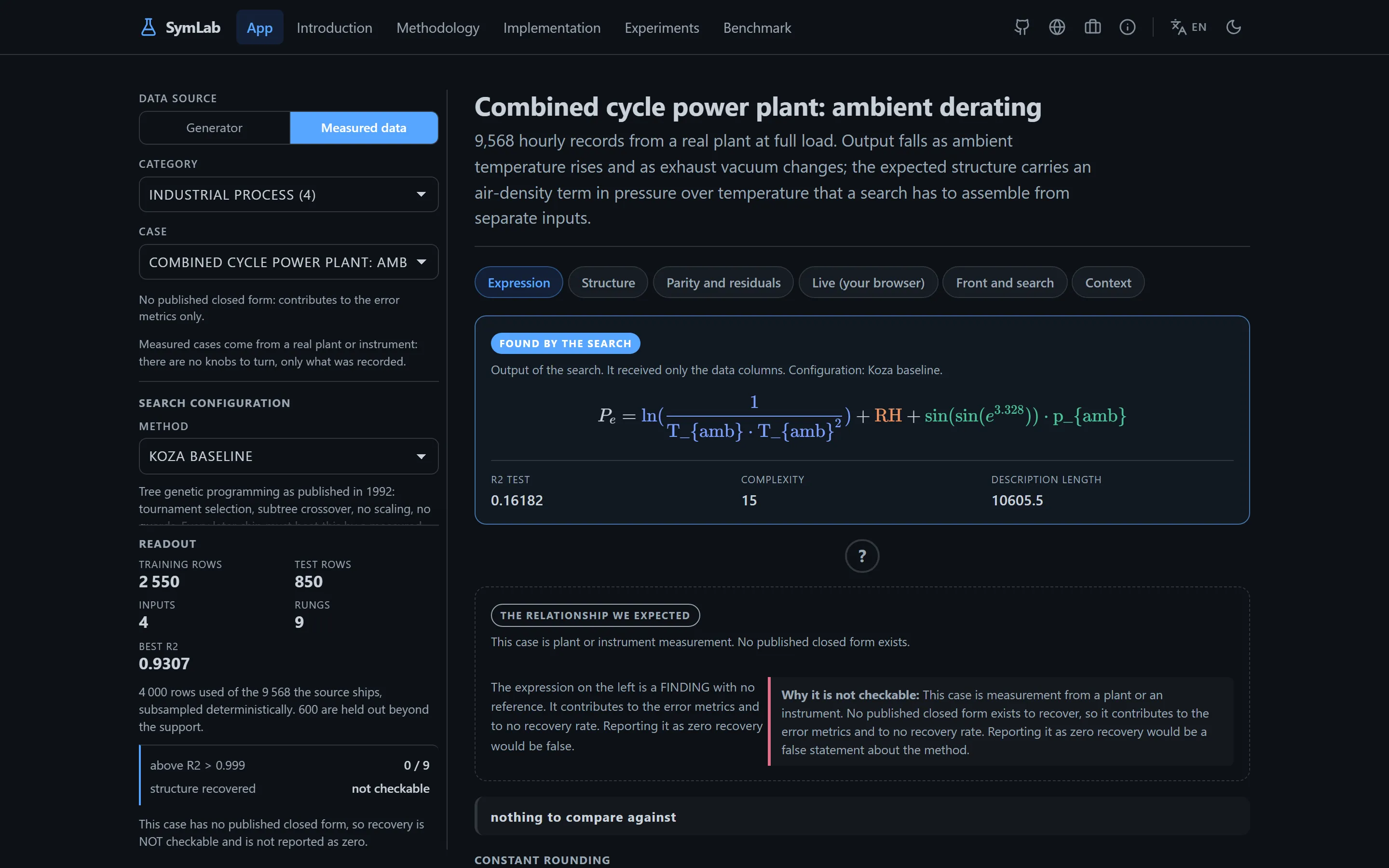
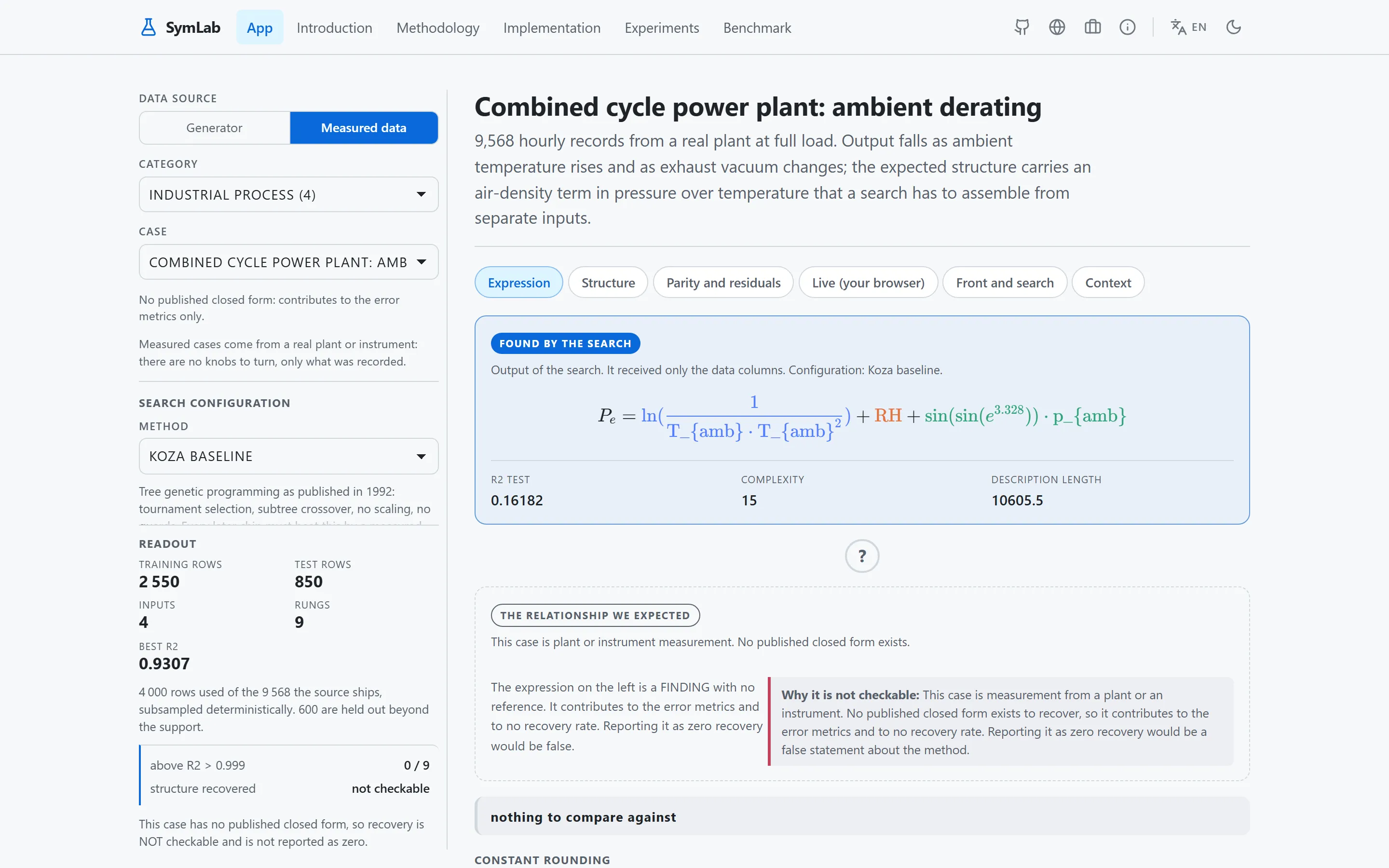
A public research lab on symbolic regression: recovering an explicit closed-form expression from data, rather than fitting a predictor nobody can read. Its reason to exist is one distinction: accuracy and structural recovery are different claims, and a method can clear R2 above 0.999 while returning a structure with nothing in common with the law that generated the data. SymLab reports the two separately, on every case, and never averages them into one number. It runs multiple search families (genetic programming with linear scaling and deduplication, sparse regression) at published budgets, live in the browser, on benchmark laws where the true expression is known.
Business Context
Anywhere a model has to be trusted, explained, or turned into a law rather than a lookup (physics, engineering, geometallurgy, any regulated setting), an interpretable closed-form model is worth far more than a black box of equal accuracy, but only if it is the RIGHT form. SymLab is a measuring stick for that: it separates "fits well" from "found the law", which is exactly the distinction a decision-maker needs before trusting a discovered equation, and exactly the distinction most tooling hides.
Strategic Value
SymLab is a benchmark for symbolic regression that refuses the single-number score the field defaults to. By reporting accuracy and recovery separately on known-law cases, across genetic-programming and sparse-regression families at published budgets, it makes visible the failure the accuracy-only literature rewards: a near-perfect fit with the wrong structure. It is the same discipline running through the rest of the portfolio, applied to interpretability: measure the two claims separately and report the gap between them.
The Challenge
Symbolic regression promises the thing plain machine learning does not: an equation you can read, not a black box. But the field is scored almost entirely on accuracy (R2 on held-out data), and accuracy is the wrong claim if the goal is discovery. A method can fit a curve almost perfectly and hand back an expression that is structurally nothing like the underlying law. Reported as a single averaged number, that failure is invisible, so "solved" benchmarks routinely reward getting the wrong equation.
Our Approach
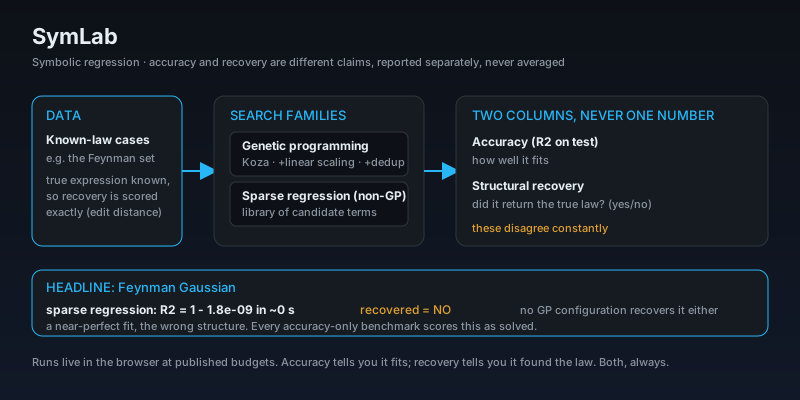
SymLab makes the measurement the product. On every case it reports accuracy (R2 on test) and structural recovery (did the returned expression match the true law) as two separate columns, never averaged. It runs search families with nothing in common on the same problems at published budgets: genetic programming (a Koza baseline, plus linear scaling and deduplication variants) and sparse regression over a library of candidate terms. The benchmark laws are ones where the ground-truth expression is known (for example the Feynman set), so recovery can be scored exactly by normalised edit distance to the true structure, not guessed. On the Feynman Gaussian, for instance, sparse regression reaches R2 of 1 minus 1.8e-09 in effectively zero seconds and still does not recover the law, and neither does any genetic-programming configuration; every accuracy-only benchmark would score this as solved. It runs live in the browser so anyone can watch a near-perfect fit return the wrong structure.
Key Performance Indicators
| KPI | Baseline | Result | Impact |
|---|---|---|---|
| Accuracy vs recovery | One averaged score (R2), which a wrong equation can win | Two separate columns on every case: R2 on test AND structural recovery by edit distance to the true law | You see when a near-perfect fit found the wrong structure |
| The headline case | Accuracy-only benchmarks score it solved | Feynman Gaussian: sparse regression R2 = 1 - 1.8e-09 in ~0 s, recovered = no; no GP config recovers it either | A concrete, live example of the accuracy-recovery gap |
| Search families | One method | Genetic programming (Koza, + linear scaling, + deduplication) and sparse regression, at published budgets | Two families with nothing in common, scored by the same metrics |
Architecture
symlab pipeline
Technology Stack
Reel
A short, composed reel of the product.
In action
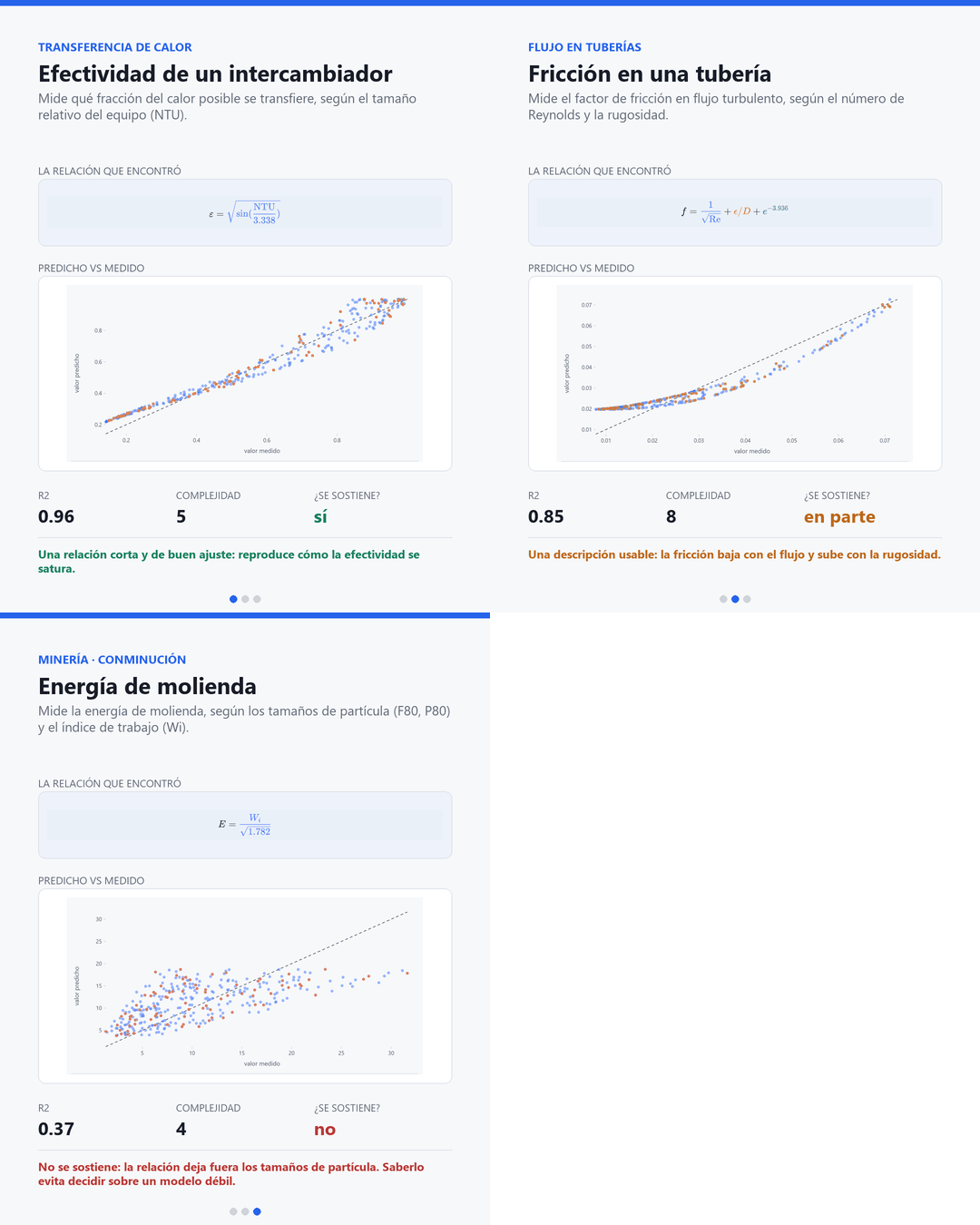
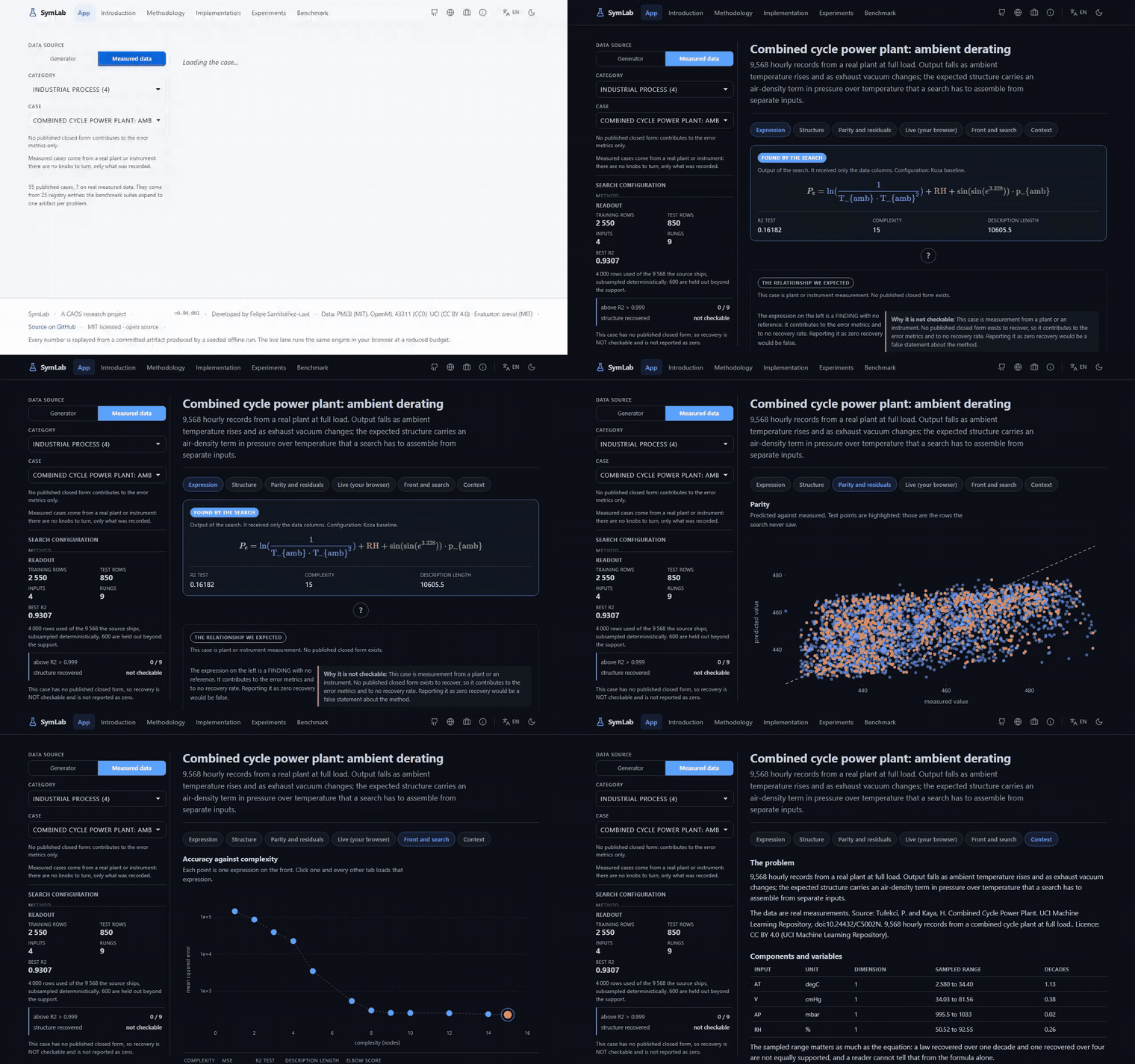
A short tour of the live app: the real interface, recorded from the deployed site.
Application Screenshots